
Wiring and Power Work Done Right
Residential Electrical Services in Alexandria for homes with undersized panels or circuits that cannot support current appliance loads
Many homes in Alexandria were built during eras when electrical demand was a fraction of what modern households require—Parker-Gray residences from the early twentieth century and mid-century Rosemont homes alike were wired for appliance counts and loads that no longer reflect how families use electricity. Omega General Contractors provides residential electrical services in Alexandria specifically for homeowners navigating the gap between what their current system can deliver and what their daily use demands. The clearest sign of the problem is usually a breaker panel that trips repeatedly or a kitchen where multiple appliances cannot run simultaneously without overloading a circuit.
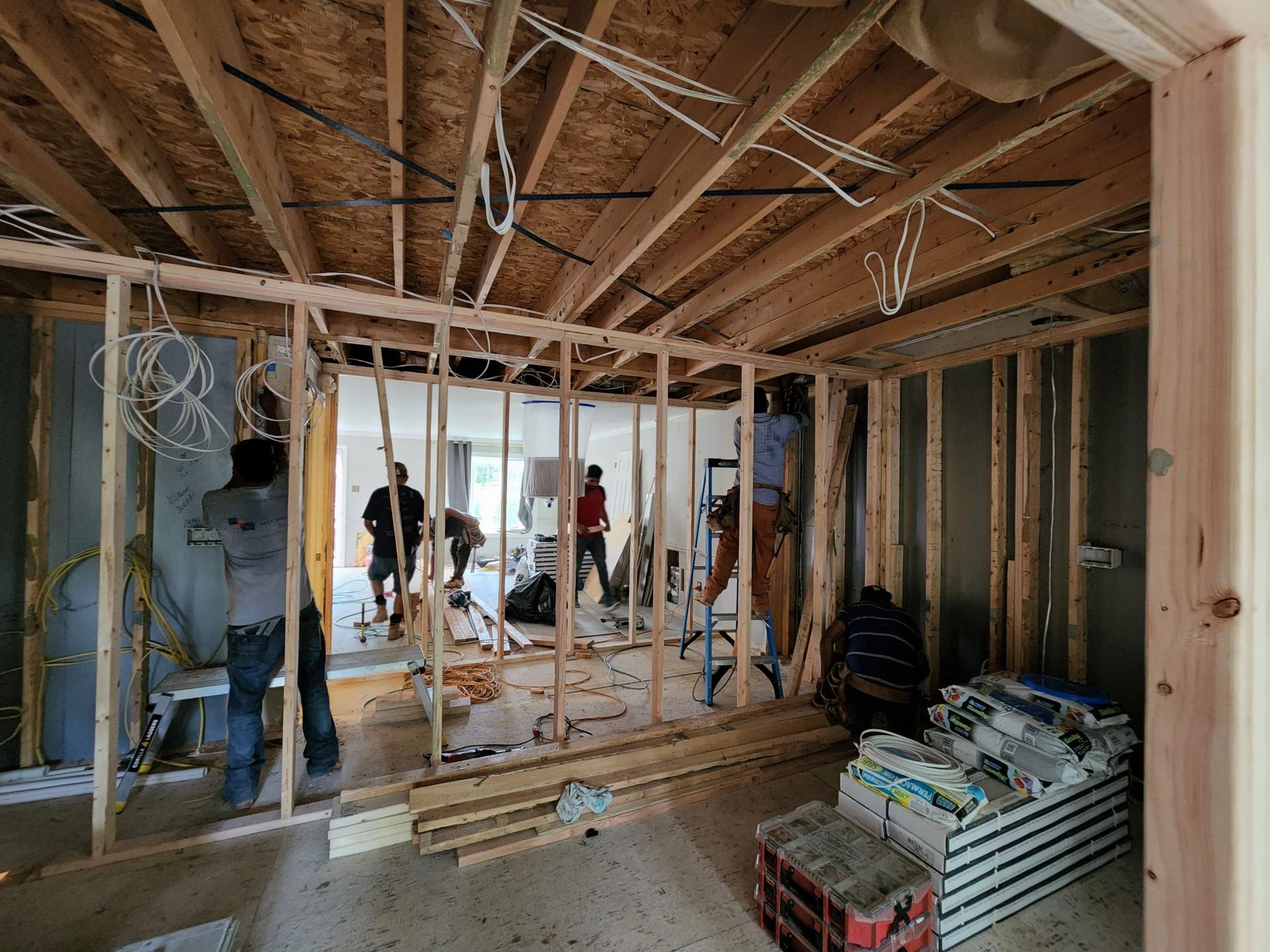
Every project begins with a full evaluation of the existing system—panel capacity, current circuit layout, and actual power demands by zone. From that assessment, Omega General Contractors plans circuit additions or redistribution and maps wiring routes that minimize disruption to finished walls and ceilings. On remodeling projects, electrical work is coordinated with plumbing and carpentry trades so rough-in is completed before walls close, eliminating the need to reopen finished surfaces later. All connections are load-tested before handoff so the system functions correctly under real demand, not just at rest.
Arrange an on-site system evaluation to identify which circuits need redistribution and where dedicated connections are required.
How Electrical Work Integrates Into Your Home
Panel upgrades in older Alexandria homes require more than swapping equipment—the original service entrance, grounding configuration, and branch circuit wiring all influence what a modern panel replacement actually involves. When a home's service is being increased from 100-amp to 200-amp capacity, the work includes inspecting and often replacing the service entrance cable, relocating breakers with appropriate amperage ratings, and confirming that the neutral and ground bars are bonded correctly to current code. Outlet and switch placement decisions are made during the planning phase rather than at rough-in, which is how placement ends up exactly where it was requested rather than defaulting to wherever the wire run was easiest.
After the work is complete, you will notice that appliances run without triggering breakers, GFCI protection is present where code requires it, and dedicated circuits for refrigerators, dishwashers, and laundry equipment are isolated from general lighting and outlet loads. What changes is that the system behaves predictably under load rather than showing stress signs when several devices run at once.
Omega General Contractors coordinates electrical work within a broader project timeline, which matters when remodeling sequences depend on electrical rough-in clearing before insulation or drywall proceeds. For standalone electrical service work not tied to a renovation, the process is the same—evaluate, plan, install, test—but the scheduling is simpler and turnaround is faster.
Common Questions About Residential Electrical Work
The questions below address how residential electrical work is performed, what decisions get made during the process, and what homeowners in Alexandria with older wiring configurations should expect.
What does a panel upgrade actually involve beyond replacing the panel box?
A panel upgrade includes inspecting the service entrance, confirming wire gauges on existing branch circuits, and verifying ground and neutral bonding—work that often reveals secondary issues in homes with original mid-century wiring common in Alexandria's older neighborhoods.
How is the circuit layout planned before installation begins?
Circuit layout is mapped during the initial evaluation by assessing existing load distribution, planned appliance locations, and code requirements for dedicated circuits, so routing decisions are set before any walls are opened.
When does electrical rough-in need to happen relative to other remodeling trades?
Rough-in must be completed and inspected before insulation is installed and before drywall goes up, which is why trade coordination on a remodeling schedule matters—electrical work that misses its window requires reopening finished surfaces.
What is the difference between a dedicated circuit and a general branch circuit?
A dedicated circuit serves a single appliance or load point with its own breaker, which prevents that device's draw from affecting lights or outlets on shared circuits—a distinction that matters most for kitchen appliances, HVAC equipment, and laundry connections.
How do you verify the system is functioning correctly after installation?
Every circuit is tested under load conditions before handoff, GFCI outlets are triggered and reset to confirm function, and the panel is reviewed to confirm that breaker labeling matches actual circuit assignments.
Omega General Contractors also provides residential electrical services in Arlington, Falls Church, Fairfax, Annandale, and Reston. To get started, request a system evaluation and describe the specific appliances or areas where your current electrical setup is falling short.